

‘In Focus’ – An Interview with Parul Yadav
Parul Yadav (she/her) is a first-generation immigrant who moved to Canada at the age of 21. She is a communications strategist and founder of North Wave Media.
After years of working across a diverse range of industries and sectors, Parul found herself craving work that centered empathy, cultural awareness, and real partnership, rather than hierarchy and performative storytelling. That realization ultimately led her toward entrepreneurship.
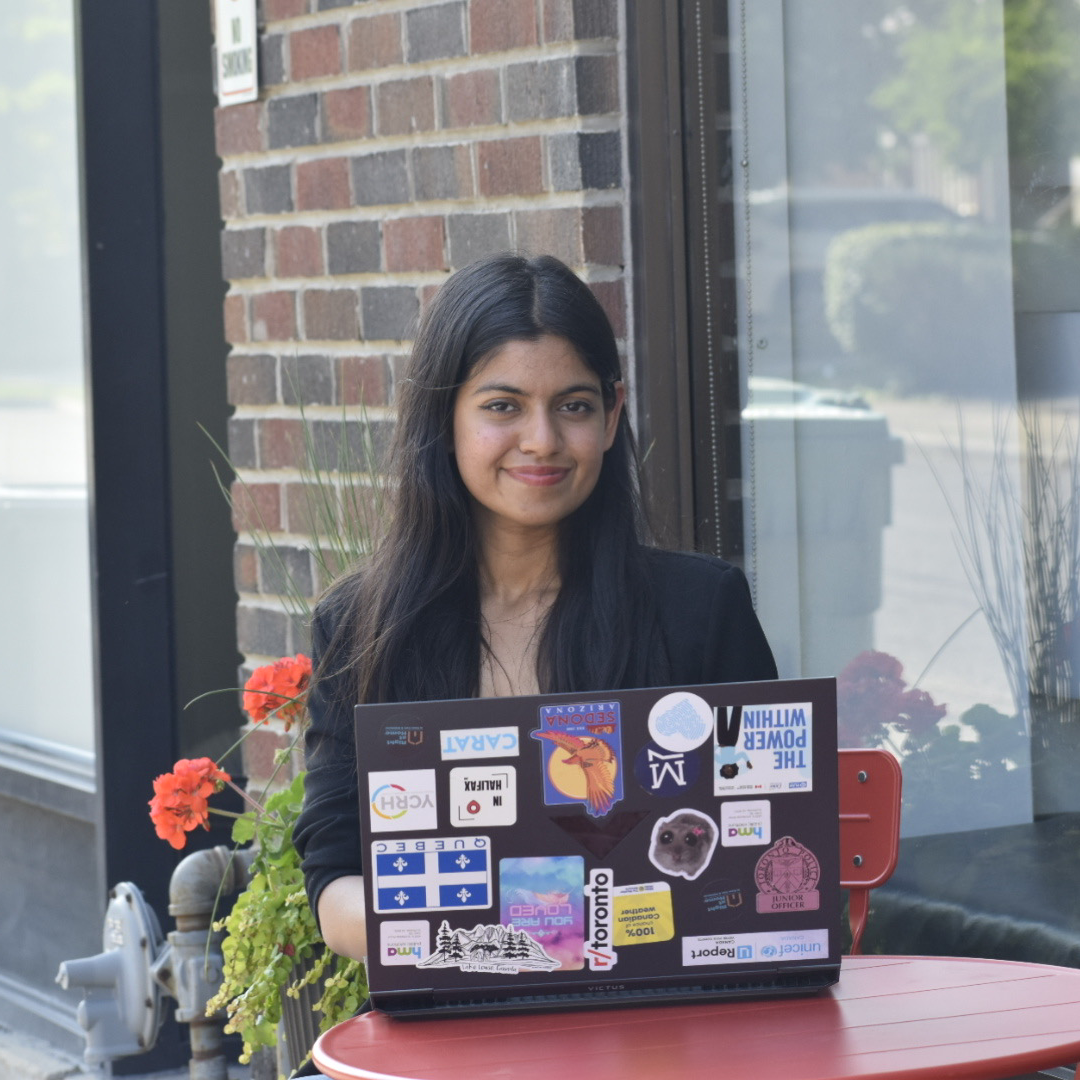
Parul Yadav | Founder of North Wave Media
“As a young BIPOC founder, my goal is to build an agency that not only delivers result, but also reimagines what leadership, collaboration, and success can look like in this industry.”
Tell us about yourself and your work.
Like many newcomers and racialized young professionals, I learned early on how to create space for myself in rooms where representation was limited and belonging wasn’t always guaranteed.
Over the last six years, I’ve worked across healthcare, nonprofit, government, consumer goods, tech, lifestyle, and community sectors, partnering with organizations committed to impact, equity, and meaningful change. My career began in traditional agency environments, where I gained strong technical experience, but I also quickly realized that the industry often wasn’t built with people like me in mind — young, racialized, values-driven, and deeply collaborative.
In June 2025, I launched North Wave Media, a boutique media agency rooted in inclusion, creativity, and community care. We support clients across Canada and the U.S. from Toronto, Vancouver, and Halifax to Chicago, Denver, Phoenix, San Francisco, Atlanta, and beyond — offering PR strategy, media relations, digital storytelling, influencer partnerships, branding, and thought leadership. As a young BIPOC founder, my goal is to build an agency that not only delivers result, but also reimagines what leadership, collaboration, and success can look like in this industry.
“My journey as a young brown woman navigating and now shaping this industry informs not just what I do, but how I do it, with empathy, courage, and a commitment to opening doors for others.”
Beyond client work, I mentor emerging professionals, support social impact initiatives, and serve as a Board Director for my local community health centre in Toronto, where I lend my communications expertise to youth programming, housing, and healthcare access.
My journey as a young brown woman navigating and now shaping this industry informs not just what I do, but how I do it, with empathy, courage, and a commitment to opening doors for others.
What are some of the challenges or barriers you have faced, and continue to face in your industry as a racialized Woman of Colour?
Communications and PR are industries where visibility, confidence, and proximity to power often shape whose voices are amplified. As a racialized woman of colour, I’ve experienced several intersecting challenges.
One of the most persistent barriers has been the lack of representation in leadership. Early in my career, I rarely saw women who looked like me leading teams, shaping narratives, or making decisions. That absence made it harder to imagine myself in those roles not because I lacked ambition, but because the pathway wasn’t visible.
I’ve also encountered subtle and overt identity politics. There were moments when my ideas were overlooked, questioned, or only validated when echoed by someone with more privilege, an experience many women of colour share. Alongside this was the pressure to code-switch, to soften my cultural identity or leadership style to fit an unspoken standard of “professionalism,” which often felt misaligned with who I am.
Being young, brown, and in leadership added another layer. Age, race, and gender intersect in ways that invite doubt. I’ve had to consistently prove that empathy is not weakness, that collaboration is not passivity, and that women of colour can lead with both softness and authority.
These experiences didn’t push me out of the industry, they pushed me to build something different. North Wave Media was created as a space where belonging isn’t conditional and where diverse perspectives are central, not peripheral.
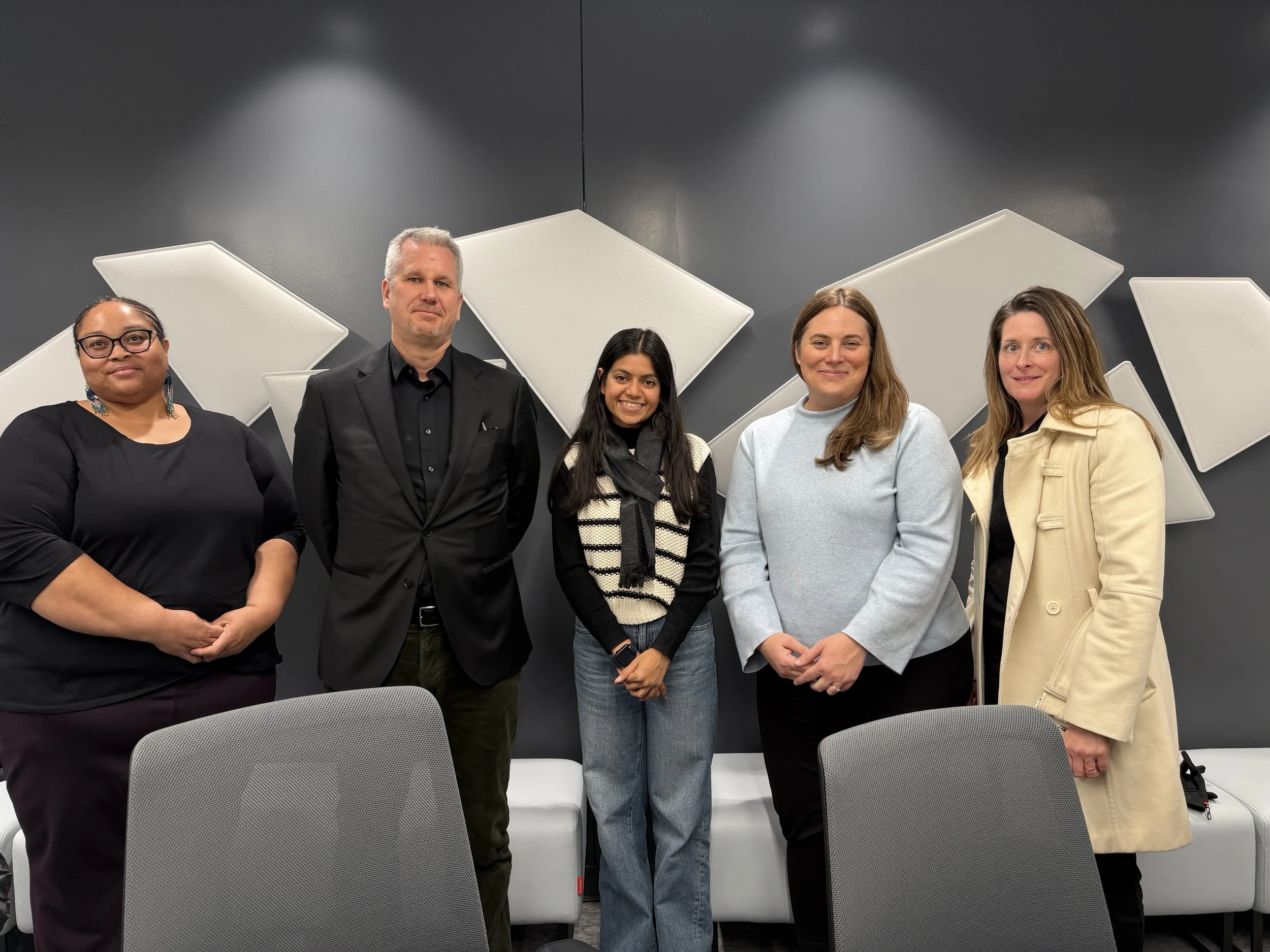
Parul Yadav (centre) standing amongst her team.
What are some tools, resources, strategies, and approaches you use to cope with these challenges?
Over time, I’ve learned to ground myself in practices that strengthen both my confidence and well-being:
Community care over individual survival: I surround myself with other women of colour mentors, peers, and friends who understand the nuances of navigating predominantly white industries. Those shared experiences create space for healing and perspective.
Reflective leadership: I lead with emotional intelligence, active listening, and transparency values that have helped me build genuine relationships with clients, collaborators, and my team. These principles allow me to stay rooted in who I am.
Creative expression as healing: Writing, storytelling, and strategy-building are parts of my job, but they’re also ways for me to process identity, belonging, and purpose. Creativity keeps me connected to myself.
Rest as resistance: I’ve learned to take breaks without guilt. Solo travel, dancing, exploring food, and spending quality time with loved ones keep me grounded and remind me that my worth isn’t tied to productivity.
Setting boundaries: As an entrepreneur, especially a woman of colour, it’s easy to fall into over-delivery. I’m learning continually that boundaries create space for better work and healthier relationships. These tools help me navigate an industry that wasn’t built for people like us, while allowing me to stay soft, strong, and grounded.
What advice would you give to younger Women of Colour in your industry?
Your identity is not an obstacle, it’s your power. The perspective you bring as a woman of colour is a strategic advantage. Don’t shrink it to fit into spaces that can barely hold you.
Build your own table, or reshape the one you sit at. If a room doesn’t make space for you, create one that does. You don’t need permission to lead.
Find community early. Mentorship and peer support are invaluable. Seek people who see your potential before you see it in yourself.
Advocate for yourself boldly. Whether it’s asking for opportunities, stating your worth, or sharing ideas, trust that your voice belongs.
Stay curious, stay teachable, but don’t dim your light. Growth and humility matter, but so does self-belief. Hold both.
“Stay curious, stay teachable, but don’t dim your light. Growth and humility matter, but so does self-belief. Hold both.”
How do you see the future of workplaces for Women of Colour?
I believe the future can be radically different but only if we commit to intentional, structural change. Workplaces must move beyond diversity statements and invest in:
Leadership pipelines that actively uplift women of colour not just in entry positions, but in senior roles where decisions are made.
Cultures rooted in psychological safety where WOC don’t have to code-switch or hide parts of themselves to feel respected.
Pay equity and opportunity equity to address systemic gaps that disproportionately impact Black, Indigenous, and brown women.
Values-driven workplaces where empathy, cultural competency, and equity are core competencies not afterthoughts.
“I see a future where women of colour lead with confidence, without feeling the need to justify their presence. A future where our voices shape narratives, policies, and industries. Where our talent isn’t questioned, and our brilliance isn’t conditional.”
I see a future where women of colour lead with confidence, without feeling the need to justify their presence. A future where our voices shape narratives, policies, and industries. Where our talent isn’t questioned, and our brilliance isn’t conditional.
My hope is that my work can help build that future, not just for myself, but for the next generation of women who deserve workplaces where they can thrive fully and unapologetically.
Connect with Parul Yadav